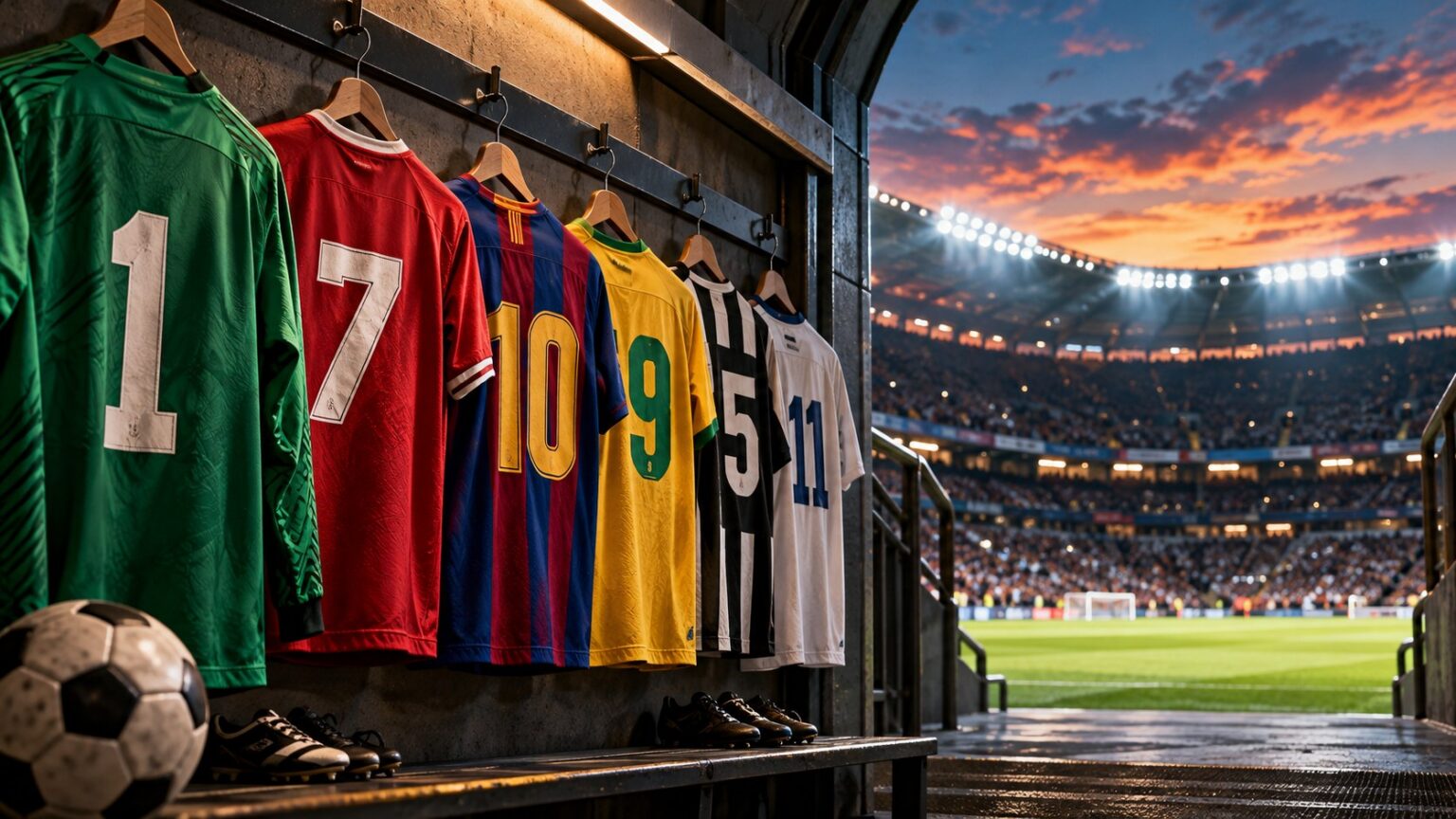

Football shirt numbers might look like a simple way to identify players, but they have become an important part of the game’s history, culture and identity. From the goalkeeper wearing number 1 to the legendary playmakers associated with number 10, certain numbers carry a meaning that goes far beyond the name printed above them.
Today, supporters buy shirts bearing their favourite player’s number, young footballers choose numbers inspired by their heroes, and clubs sometimes retire shirts to honour iconic figures. Yet football did not always work this way.
When Were Football Shirt Numbers First Introduced?
In the early years of organised football, players generally took to the pitch without permanent shirt numbers. Supporters had to identify footballers through their appearance, playing position and knowledge of the team.
Numbered shirts began appearing in English football in the 1920s. One of the best-known early examples came in 1928, when Arsenal and Chelsea wore numbered shirts in league matches. Numbers initially helped spectators identify players and were closely linked to their positions.
The traditional system ran from 1 to 11, with each number associated with a particular role on the pitch. As formations and tactics evolved, however, the relationship between numbers and positions became less rigid.
What Do Traditional Football Shirt Numbers Mean?
Number 1: The Goalkeeper
Number 1 is the classic goalkeeper’s shirt. It became synonymous with the last line of defence, worn by players responsible for stopping opposition attacks and organising their defenders.
Great goalkeepers have helped give the number its iconic status, including Peter Schmeichel, Gianluigi Buffon and Manuel Neuer. Although goalkeepers can wear other numbers, number 1 remains the most recognisable choice for the position.
Numbers 2 and 3: The Full-Backs
Traditionally, number 2 was associated with the right-back and number 3 with the left-back. These players were expected to defend against opposition wingers and protect the sides of the defence.
Modern full-backs have much greater attacking responsibilities. Players such as Cafu, Roberto Carlos and Ashley Cole demonstrated how full-backs could become important attacking influences while retaining their defensive duties.
Numbers 4, 5 and 6: The Defensive Foundation
Numbers 4, 5 and 6 have traditionally been associated with central defenders and midfielders, although the exact assignments vary between countries, formations and footballing eras.
Centre-backs protect the goal, win aerial duels and organise the defensive line. Defensive midfielders operate further forward, breaking up opposition attacks and helping their teams retain possession. Modern football has blurred these distinctions, with defenders increasingly expected to build attacks from the back.
Number 7: The Entertainer
Number 7 has become one of football’s most recognisable shirt numbers. Traditionally associated with a winger or attacking player, it has been worn by some of the game’s most famous stars.
Cristiano Ronaldo made the number central to his identity at Manchester United, while David Beckham and George Best also helped establish its legendary reputation. Number 7 is now strongly associated with flair, creativity and match-winning performances, although there is no rule requiring its wearer to play on the wing.
Number 9: The Goalscorer
Number 9 traditionally belongs to the centre-forward, the player expected to lead the attack and score goals. Alan Shearer, Ronaldo Nazário, Gabriel Batistuta and Robert Lewandowski are among the famous strikers associated with the role.
The modern number 9 can be a physical target man, a mobile penalty-box striker or a forward who links play with teammates. Whatever the tactical interpretation, the number remains closely associated with goalscoring.
Number 10: The Creative Genius
Few shirt numbers carry the same cultural significance as number 10. Historically associated with an attacking midfielder or creative forward, the number became synonymous with players who could unlock defences through vision, technique and imagination.
Pelé, Diego Maradona, Zinedine Zidane and Lionel Messi have all helped make number 10 legendary. The role has changed as teams have adopted different formations and pressing systems, but supporters still associate the number with footballing intelligence and individual brilliance.
How Did Footballers Start Choosing Their Own Numbers?
The traditional system began to change as clubs moved towards permanent squad numbering. Rather than wearing a number determined by their starting position, players could increasingly keep the same number throughout a season.
Permanent squad numbers became established in the English Premier League during the 1990s. This made it easier for supporters to recognise individual footballers and allowed players to build a distinctive identity around a particular number.
Numbers outside the traditional starting eleven became much more visible. Substitutes and other squad members could retain their numbers regardless of whether they started a match.
For players, choosing a number became a personal decision. Some selected numbers linked to childhood heroes, while others preferred a number with personal significance. Shirt numbers also became an important part of football merchandise, allowing supporters to identify with their favourite players.
Why Do Modern Footballers Wear Numbers Such as 66, 77 and 99?
Modern football has moved well beyond the traditional 1–11 numbering system. Players now wear numbers such as 14, 21, 23, 66 and 99, depending on club policies and competition regulations.
There is no universal tactical meaning behind every modern shirt number. Some choices reflect a player’s preferred number, while others are influenced by availability, personal history or a desire to stand out.
Liverpool defender Trent Alexander-Arnold became associated with number 66, demonstrating how a number outside the traditional system can become instantly recognisable. Meanwhile, number 14 acquired its own footballing heritage through players including Thierry Henry.
The important distinction is that modern shirt numbers often represent individual identity rather than a fixed position.
Can Football Clubs Retire Shirt Numbers?
Some clubs retire a shirt number in honour of a player who made an extraordinary contribution to their history. This practice is more common in certain sports than in traditional European football, where squad numbers are generally reused.
One notable example is Manchester City, which retired number 23 in honour of Marc-Vivien Foé following his death in 2003. Such gestures can transform a shirt number from ordinary squad equipment into a lasting symbol of remembrance.
Why Football Shirt Numbers Still Matter
Football shirt numbers have developed from a practical identification system into an important part of the sport’s culture. Traditional numbers still help supporters understand familiar positions, while modern squad numbers allow players to establish distinctive identities.
A number can represent a legendary career, a memorable goal, a club’s history or a connection between generations of supporters. As tactics continue to evolve, the meaning of individual positions may change, but the emotional significance of shirt numbers remains remarkably strong.
For many supporters, a number will always bring one particular footballer to mind. That is what makes football shirt numbers more than simple identifiers: they are part of the stories that make the game memorable.
Frequently Asked Questions About Football Shirt Numbers
Why does the goalkeeper usually wear number 1?
Number 1 became associated with the goalkeeper through the traditional numbering system, in which players wore numbers corresponding broadly to their positions.
Why is number 10 so important in football?
Number 10 is traditionally associated with creative attacking players. Legends such as Pelé, Diego Maradona and Lionel Messi helped establish its reputation as one of football’s most prestigious numbers.
When did permanent squad numbers become common in English football?
Permanent squad numbering became established in the English Premier League during the 1990s, replacing the expectation that starting players would wear numbers 1–11.
Can footballers wear any shirt number?
Not necessarily. The numbers available depend on competition regulations, club policies and squad registration requirements. There is no single universal rule that applies identically to every competition.
Why do some footballers wear unusual shirt numbers?
Modern players often select numbers for personal reasons, including childhood heroes, birthdays, previous shirts or simply because their preferred number is unavailable.
Explore more football records, statistics and historical facts in the MyFootballFacts Football Stats section.