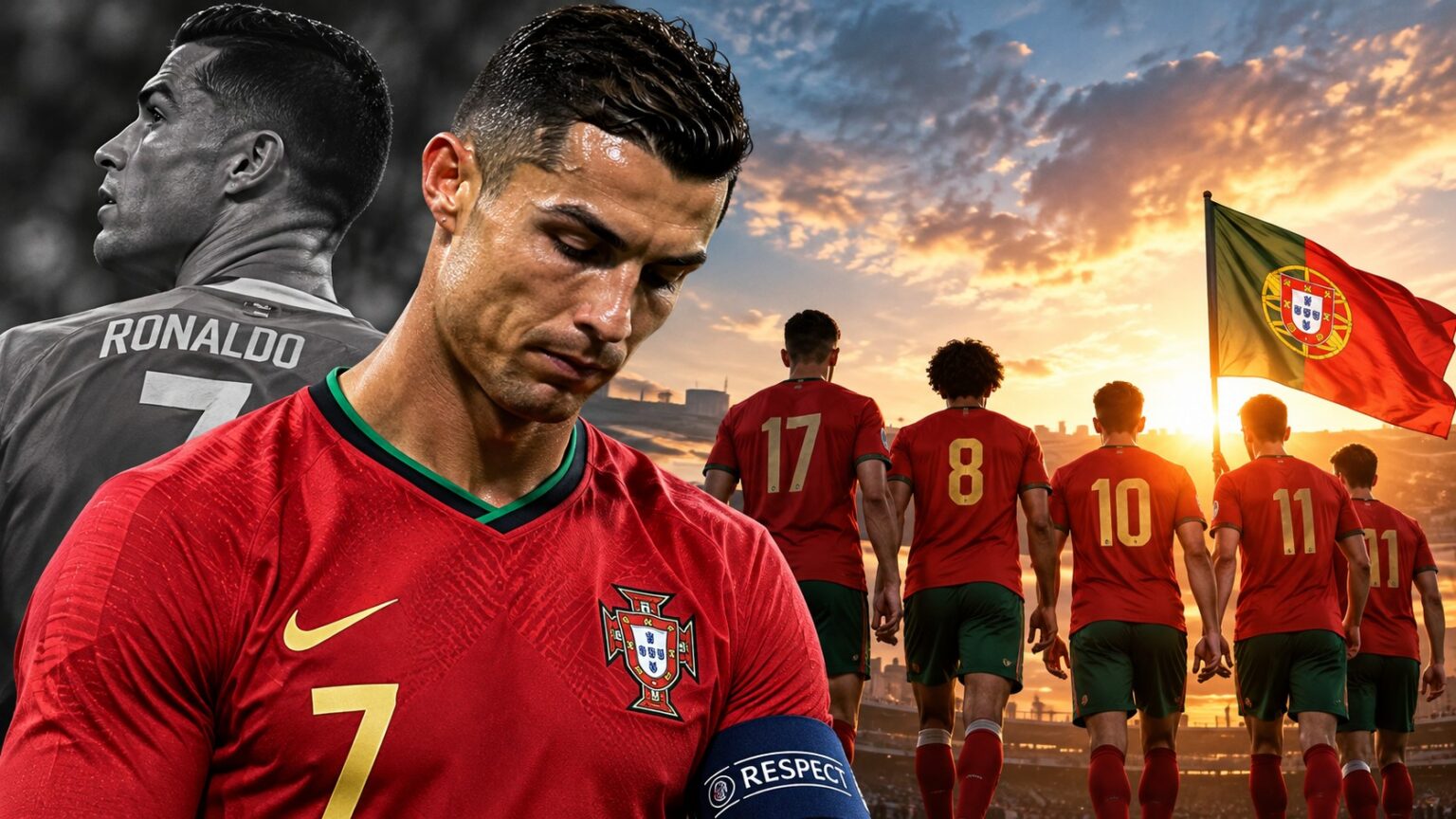
For over two decades, the narrative surrounding the Portugal national football team was defined by a single, monolithic figure: Cristiano Ronaldo. The iconic forward carried the tactical, mental, and cultural weight of a nation on his shoulders, leading Seleção das Quinas through generational transitions, international triumphs, and global scrutiny. However, recent developments in the international window have exposed a deep rift between the legend’s individual ambition and the squad’s collective evolution.
Following a high-profile fallout over playing time with manager Jorge Jesus during the latest UEFA Nations League international break, Ronaldo’s dramatic departure from the team camp sent shockwaves through European football. Yet, the question burning in the minds of supporters and analysts alike is no longer just about the ethics of his walkout—it is whether Portugal has finally outgrown its greatest-ever icon.
The Tactical Shift: Life After the Focal Point
For years, managers felt compelled to structure Portugal’s attack entirely around Ronaldo’s instincts. While this strategy yielded unprecedented success during his peak years, it frequently reduced dynamic, high-profile creative talents into secondary options. In modern international football, where press resistance, positional fluidity, and collective defensive work-rate dominate tactical doctrine, operating with an immovable target man can restrict a team’s ceiling.
Jorge Jesus’s tactical approach represents a clear break from this reliance. In the immediate aftermath of Ronaldo’s departure, Portugal faced a high-stakes fixture that served as a direct referendum on the team’s identity. Far from collapsing under the pressure or missing their talismanic leader, the squad delivered a fluid, cohesive, and dominant performance.
Without needing to funnel every final-third delivery toward a single player, Portugal’s attack operated with unpredictable variance. Interchanging channels, rapid transitional pressing, and fluid movement between the midfield and frontline allowed dynamic playmakers to thrive in open space. The comfortable victory proved emphatically that Jesus has built a modern unit capable of excelling on the merit of its system rather than individual star power.
An Unavoidable Generational Changing of the Guard
The immediate tactical success without Ronaldo highlights an inevitable truth: Portugal possesses one of the most talent-dense squads in world football. A brilliant new wave of technical midfielders and versatile attackers has matured into world-class performers in their own right. These players no longer require a protective veteran presence to navigate international pressure; they are ready to lead on the global stage.
Ronaldo’s frustration stems from a classic sports dilemma: the friction between an aging legend’s elite competitive ego and a team’s natural evolution. Having built a career on defying age, physical limits, and tactical systems, stepping into a reduced squad role or rotational spot on the bench feels fundamentally incompatible with his mindset. However, international football demands adaptable squad depth, and no single player—regardless of stature—can remain immune to tactical rotation.
Is the International Career Over?
While Ronaldo’s relentless drive and unmatched goalscoring record make it unwise to rule out future appearances entirely, this latest fallout feels qualitatively different from previous disputes. Jorge Jesus has established firm managerial authority, demonstrating that tactical discipline and team unity supersede individual legacies.
If Ronaldo accepts a revised role focused on high-impact substitute appearances and leadership from the bench, a final reconciliation remains theoretically possible. But if his expectation remains an automatic starting spot in competitive international fixtures, the door to his legendary international career may well have swung shut for good.
Portugal has officially entered a new era. The squad has proved it can thrive, win, and evolve without its long-standing figurehead. Whether Ronaldo chooses to adapt to this new reality or walk away permanently, the evolution of Portuguese football will continue unabated.