

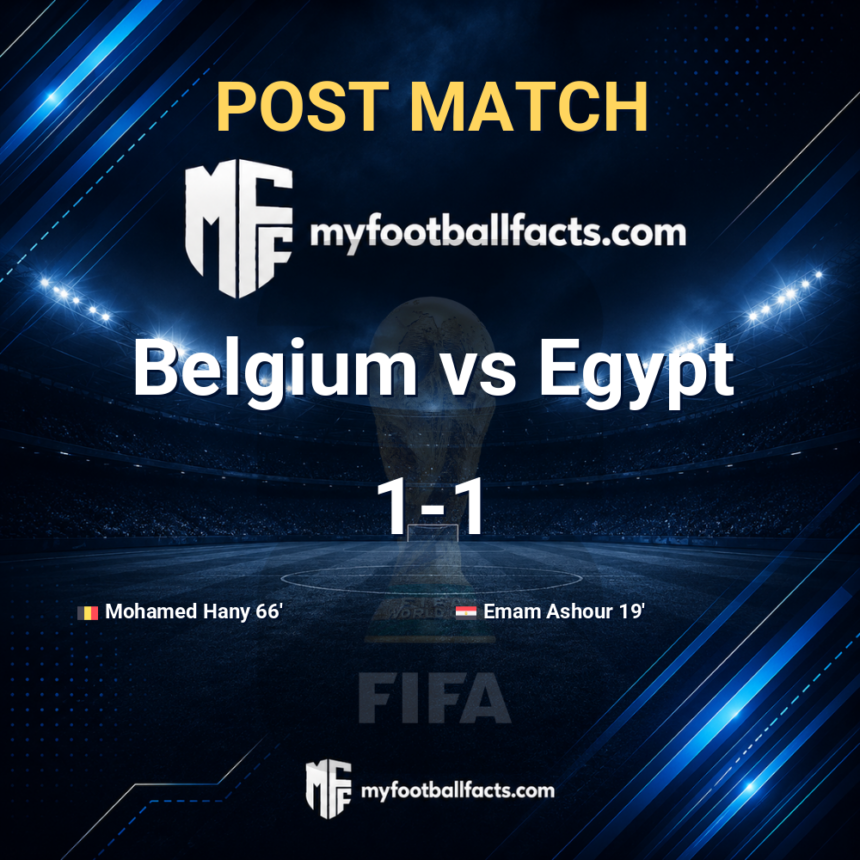
POST MATCH
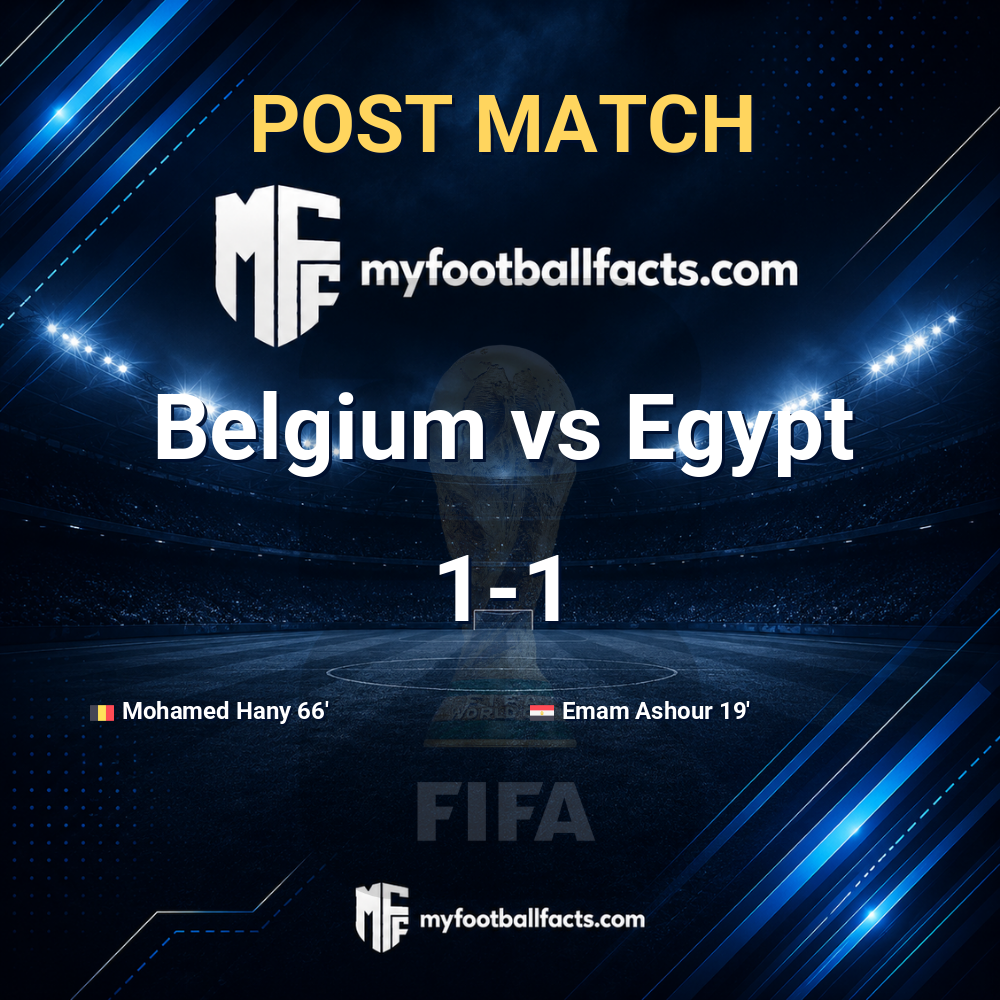
Belgium 1-1 Egypt Post Match Review
Match Summary
In a tightly contested World Cup clash at Seattle Stadium, Belgium and Egypt played to a 1-1 draw, showcasing both teams' resilience and tactical discipline. The match began with Egypt taking an early lead in the 19th minute, when Emam Ashour found the net with a well-placed shot, assisted by the ever-dangerous Mohamed Salah. Belgium, despite enjoying slightly more possession, struggled to convert their chances into goals, with their first half efforts failing to find the back of the net.
The second half saw Belgium ramp up their pressure, and their persistence paid off in the 66th minute when Mohamed Hany inadvertently turned the ball into his own net, leveling the score at 1-1. This equaliser injected new life into the Belgian side, who pushed forward in search of a winner, but Egypt's defence held firm, ensuring the match ended in a stalemate.
Both teams displayed moments of brilliance, but ultimately, neither could secure the crucial three points. Belgium's inability to capitalise on their possession and Egypt's solid defensive display were key factors in the draw, leaving both teams with a point as they continue their World Cup campaigns.
Match Statistics
The match statistics reveal a closely fought encounter, with Belgium edging possession at 54% compared to Egypt's 46%. Both teams registered a similar number of shots, with Belgium taking 15 attempts and Egypt 14, but both sides struggled to convert these opportunities into goals, managing only three shots on target each. The match was also marked by a physical edge, with both teams committing 15 fouls and receiving two yellow cards apiece, indicating a fiercely contested battle in midfield.
Egypt's corner count of seven to Belgium's two highlights their ability to create set-piece opportunities, while the equal number of saves made by both goalkeepers (two for Belgium and three for Egypt) underscores the effectiveness of the defensive units. The match was a testament to the tactical discipline of both sides, with Belgium's attempts to dominate possession countered effectively by Egypt's structured defensive approach.
Goals and Assists
The opening goal came from Emam Ashour in the 19th minute, who capitalised on a well-timed assist from Mohamed Salah. Ashour's strike put Egypt ahead, showcasing their clinical finishing in the early stages. Belgium's equaliser arrived in the 66th minute, but it was an own goal from Mohamed Hany that brought the score to 1-1, as he inadvertently deflected the ball into his own net under pressure from the Belgian attack. This moment shifted the momentum of the match, as Belgium sought to build on their newfound parity.
How the Match Was Won
The match was defined by tactical battles and moments of individual brilliance. Egypt's early goal set the tone, allowing them to sit back and absorb pressure, which they did effectively for much of the match. Belgium's persistence in the second half, however, was commendable, as they increased their attacking intent and finally found a way through with the own goal from Hany. This equaliser shifted the dynamics, forcing Egypt to defend deeper as Belgium pressed for a winner.
Despite Belgium's late surge, they were unable to find a decisive breakthrough. Egypt's disciplined defensive structure, combined with timely substitutions, helped them maintain their composure and secure a valuable point. The match highlighted the importance of tactical awareness and the ability to adapt under pressure, with both teams showcasing their strengths and weaknesses throughout the encounter.
Key Moments Timeline
The match was punctuated by several key moments that shaped the outcome, from early yellow cards to the pivotal goals. Belgium's attempts to assert their dominance were met with Egypt's resolute defending, leading to a series of fouls and cautions that reflected the intensity of the contest. The timeline of events illustrates how the match unfolded, with each incident contributing to the overall narrative of the game.
Lineups and Tactical Shape
Belgium Tactical Shape
Belgium lined up in a 4-2-3-1 formation, with Thibaut Courtois in goal and a back four consisting of Maxim De Cuyper, Brandon Mechele, Arthur Theate, and Thomas Meunier. Axel Witsel and Kevin De Bruyne anchored the midfield, while Romelu Lukaku led the attack supported by Leandro Trossard and Jérémy Doku on the flanks. The substitutions made in the second half aimed to inject fresh energy into the midfield and attack, but ultimately did not yield the desired result.
Formation: 4-2-3-1
Egypt Tactical Shape
Egypt also adopted a 4-2-3-1 formation, featuring Mohamed El Shenawy in goal and a defensive line that included Mohamed Hany and Ahmed Fatouh. Emam Ashour played a crucial role in midfield, while Mohamed Salah operated as a creative force, supporting the attack alongside Mahmoud Trezeguet and Mostafa Mohamed Zaki Abdelraouf. The substitutions made later in the match were strategic, aimed at preserving the draw and maintaining defensive solidity.
Formation: 4-2-3-1
Tactical Story of the Match
The tactical battle between Belgium and Egypt was characterised by contrasting styles. Belgium aimed to control possession and create chances through their midfield play, relying on the creativity of De Bruyne and the physical presence of Lukaku. However, Egypt's disciplined defensive setup effectively neutralised Belgium's attacking threats, forcing them into long-range efforts and limited opportunities inside the box.
On the other hand, Egypt's strategy revolved around quick counter-attacks and exploiting the spaces left by Belgium's attacking intent. The early goal from Ashour was a product of this approach, allowing Egypt to defend with a lead. As the match progressed, Belgium's increased urgency led to more attacking forays, but Egypt's resilience and tactical discipline kept them in the game, ultimately leading to a well-earned draw.
Player Impact
Emam Ashour was undoubtedly the standout performer, not only scoring the opening goal but also demonstrating his ability to control the midfield and link play effectively. His partnership with Mohamed Salah proved pivotal, as Salah's assist showcased his vision and ability to create chances. Ashour's overall performance earned him the MyFootballPicks Man of the Match accolade, reflecting his influence on the game.
Belgium's Kevin De Bruyne was instrumental in orchestrating play from midfield, although he was unable to convert his creativity into goals. Romelu Lukaku's presence up front was felt, but he was often isolated due to Egypt's strong defensive organisation. The substitutions made by Belgium, particularly the introduction of Charles De Ketelaere, aimed to add fresh legs and attacking impetus, yet they could not find a way past a resolute Egyptian defence.
On the Egyptian side, Mohamed Hany's unfortunate own goal was a blemish on an otherwise solid performance, as he had been effective in limiting Belgium's wide threats. The defensive unit as a whole, including Ramy Rabia and Ahmed Fatouh, worked tirelessly to maintain their shape and thwart Belgium's advances, showcasing their commitment to the cause.
Updated Form Guide
Belgium's recent form has been impressive, with a string of victories leading into this match, including a dominant 5-0 win against Tunisia. However, the draw against Egypt may serve as a wake-up call, highlighting areas for improvement as they aim to progress in the tournament. Egypt, on the other hand, will take confidence from this result after a mixed run of form, including a recent win against Russia and a draw against Spain. This point could provide a crucial boost as they look to build momentum in their World Cup campaign.
Belgium
Egypt
What’s Next for Both Teams?
Belgium will look to regroup and refine their attacking strategy ahead of their next fixture, where they will aim to secure a win to solidify their position in the group. With their attacking talents, they will be keen to convert possession into goals and avoid further slip-ups.
Egypt, buoyed by their performance against Belgium, will seek to build on this momentum in their upcoming match. The draw against a strong Belgian side will instil confidence in their squad, and they will aim to replicate their defensive solidity while looking for opportunities to exploit their opponents' weaknesses in future encounters.
What the Result Means
The draw holds significant implications for both teams as they navigate the complexities of the World Cup group stage. For Belgium, it serves as a reminder of the need for clinical finishing and the importance of converting possession into tangible results. Meanwhile, Egypt will view this result as a positive step, reinforcing their belief in their tactical approach and resilience against high-calibre opponents.
MyFootballPicks Man of the Match
Emam Ashour's performance was pivotal in the match, earning him the MyFootballPicks Man of the Match award. His goal and overall influence in midfield were crucial in Egypt's ability to secure a point against a formidable Belgian side.
Full-Time Whistle
As the final whistle blew, both teams were left to reflect on a match that showcased their strengths and highlighted areas for improvement. The 1-1 draw was a testament to the competitive nature of the World Cup, where every point is vital, and both Belgium and Egypt will be eager to build on this result as they continue their quest for glory.