

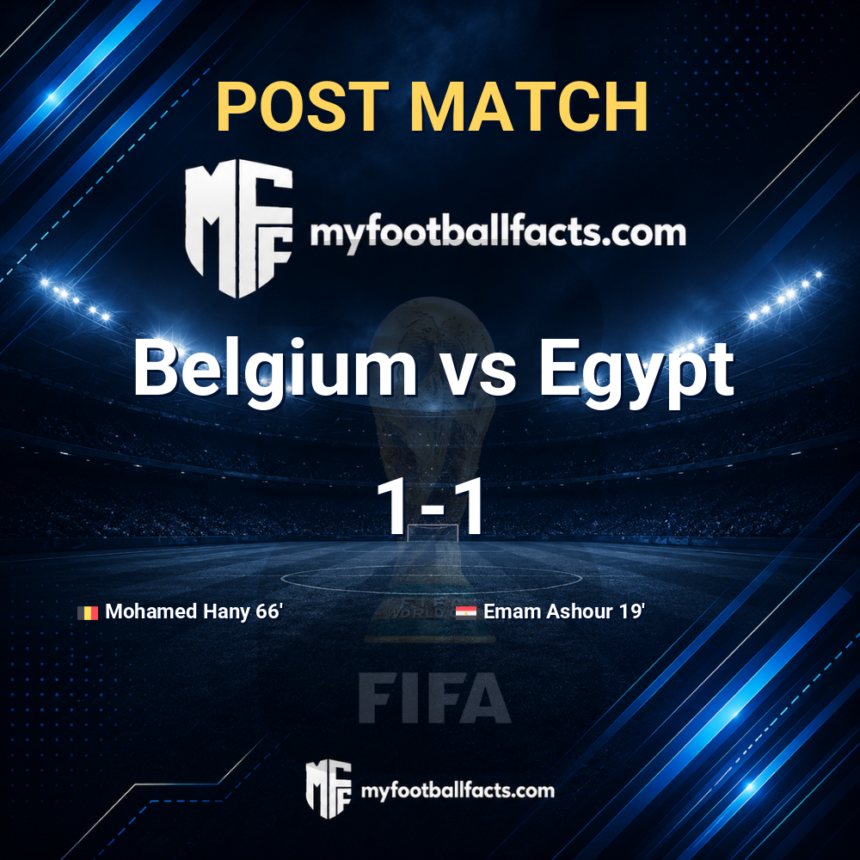
POST MATCH
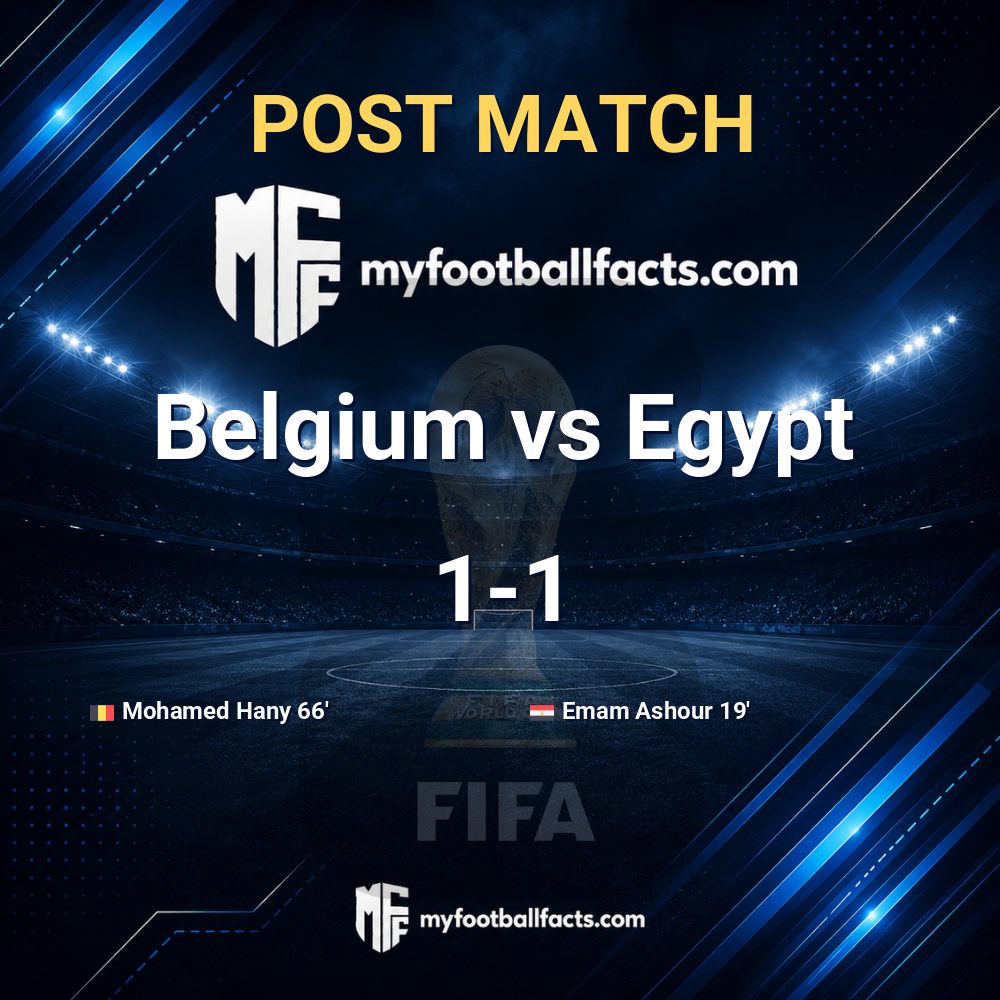
Belgium 1-1 Egypt Post Match Review
Match Summary
In a tightly contested World Cup clash at Seattle Stadium, Belgium and Egypt played out a 1-1 draw that showcased both teams' resilience and tactical discipline. The match began with Belgium enjoying slightly more possession, but it was Egypt who struck first, with Emam Ashour finding the net in the 19th minute after a clever assist from Mohamed Salah. This early goal set the tone for a spirited Egyptian side, who defended resolutely while looking to exploit counter-attacking opportunities.
Belgium, determined to respond, ramped up their attacking efforts but struggled to convert their chances into goals. Despite having more shots overall, they found it difficult to break through Egypt's well-organised defence. The game shifted dramatically in the second half when Belgium equalised in the 66th minute through an own goal by Mohamed Hany, who inadvertently turned a cross into his own net. This moment revitalised Belgium, who pressed for a winner as the match entered its final stages.
As the clock wound down, both teams had opportunities to secure all three points, but neither could find the decisive touch. The draw leaves Belgium with a sense of frustration after failing to capitalise on their possession, while Egypt will take heart from their solid performance and the impact of their star players, particularly Ashour and Salah, who played pivotal roles in the match.
Match Statistics
The statistics from the match reveal a closely fought encounter, with Belgium holding a slight edge in possession at 54% compared to Egypt's 46%. Both teams were evenly matched in terms of shots, with Belgium registering 15 attempts to Egypt's 14, though both sides managed only three shots on target. This indicates that while Belgium had more opportunities, Egypt's defence was effective in limiting clear chances, showcasing their tactical discipline.
Set pieces played a significant role in the match, with Egypt earning seven corners to Belgium's two, highlighting their ability to create pressure from wide areas. The foul count was equal at 15 for both teams, reflecting a physical battle in midfield, while the two yellow cards for each side underscored the intensity of the contest. Overall, the stats suggest that while Belgium controlled the game, Egypt's efficiency and defensive organisation were crucial in securing a valuable point.
Goals and Assists
The opening goal came in the 19th minute when Emam Ashour capitalised on a well-timed assist from Mohamed Salah, putting Egypt ahead 1-0. Ashour's strike was a testament to Egypt's counter-attacking prowess, catching Belgium off guard. However, the tide turned in the 66th minute when Belgium equalised through an own goal by Mohamed Hany, who misdirected a cross into his own net, bringing the score to 1-1. This goal shifted the momentum back in favour of Belgium, who sought to build on their newfound parity.
How the Match Was Won
The match was defined by its tactical battles and key moments that swung the momentum. Egypt's early goal allowed them to adopt a more defensive posture, forcing Belgium to take the initiative. Despite their possession, Belgium struggled to break down a well-drilled Egyptian defence, which remained compact and disciplined throughout. The equaliser from Hany, however, injected new life into Belgium, who began to push forward with greater urgency, creating several chances as they sought a winner.
The introduction of substitutes like Charles De Ketelaere for Romelu Lukaku added fresh energy to Belgium's attack, but they were unable to convert their pressure into a second goal. Egypt, meanwhile, remained dangerous on the counter, with Salah's presence always a threat. The match ultimately ended in a stalemate, reflecting the balance of play and the effectiveness of both teams' strategies.
Key Moments Timeline
The match was punctuated by several key moments that shaped the outcome, starting with early yellow cards that set a physical tone. The first half saw Egypt take the lead, while the second half featured a dramatic equaliser that changed the dynamics of the game. As both teams made tactical substitutions, the intensity remained high, with opportunities arising for both sides in the closing stages.
Lineups and Tactical Shape
Belgium Tactical Shape
Belgium lined up in a 4-2-3-1 formation, with Thibaut Courtois in goal and a back four comprising Maxim De Cuyper, Brandon Mechele, Arthur Theate, and Thomas Meunier. Axel Witsel and Kevin De Bruyne anchored the midfield, while Romelu Lukaku led the attack, supported by Leandro Trossard and Jérémy Doku on the flanks. The substitutions made in the second half aimed to inject more creativity and pace into the Belgian attack.
Formation: 4-2-3-1
Egypt Tactical Shape
Egypt also adopted a 4-2-3-1 formation, with Mohamed El Shenawy as the goalkeeper. The defensive line included Mohamed Hany and Ahmed Fatouh, while Emam Ashour and Mohamed Salah played pivotal roles in midfield. The substitutions made by Egypt were strategic, aimed at maintaining their defensive solidity while also looking to exploit counter-attacking opportunities as the match progressed.
Formation: 4-2-3-1
Tactical Story of the Match
Tactically, Belgium aimed to dominate possession and create chances through their midfield play, relying on the creativity of De Bruyne and the pace of their wingers. However, Egypt's disciplined defensive setup effectively neutralised Belgium's attacking threats, forcing them to take long-range shots rather than allowing clear-cut opportunities. The Egyptian midfield, led by Ashour, was crucial in breaking up play and transitioning quickly to attack.
In contrast, Egypt's strategy revolved around absorbing pressure and hitting Belgium on the counter. Their early goal exemplified this approach, as they capitalised on a moment of defensive lapse from Belgium. As the match progressed, Egypt's ability to maintain their shape and frustrate Belgium's attempts to penetrate their defence was key to securing a draw.
Player Impact
Emam Ashour was undoubtedly the standout performer, not only for his goal but also for his overall influence in midfield. His ability to disrupt Belgium's rhythm and transition play effectively was instrumental in Egypt's strategy. Mohamed Salah, while not on the scoresheet, provided the crucial assist for Ashour's goal and consistently posed a threat with his pace and dribbling, drawing defenders and creating space for his teammates.
On the Belgian side, Kevin De Bruyne's creative influence was evident, as he attempted to orchestrate attacks from midfield. However, he lacked the support needed to convert possession into goals. The introduction of Charles De Ketelaere added a spark to Belgium's attack, but the team struggled to find the finishing touch. Defensively, Belgium's backline, led by Mechele and Theate, had moments of vulnerability, particularly in the lead-up to Egypt's goal, which they will need to address moving forward.
Updated Form Guide
Belgium's recent form has been strong, with a notable victory against Tunisia and a solid performance against Croatia. However, the draw against Egypt may raise questions about their ability to convert possession into goals. Egypt, on the other hand, will take confidence from this result after a mixed bag of performances, including a recent win against Russia and a draw against Spain, suggesting they are building momentum as the tournament progresses.
Belgium
Egypt
What’s Next for Both Teams?
Belgium will look to regroup and refine their attacking strategy ahead of their next match, where they will aim to secure a crucial victory to boost their chances of advancing in the tournament. With a talented squad, they will need to find their scoring touch to capitalise on their possession.
Egypt, buoyed by their performance against Belgium, will seek to build on this momentum in their upcoming fixture. With key players like Salah and Ashour in form, they will aim to continue their strong showing and potentially secure a place in the knockout stages of the World Cup.
What the Result Means
The draw holds significant implications for both teams as they navigate the group stage of the World Cup. For Belgium, the inability to secure a win may dampen their confidence, especially given their attacking potential. They will need to address their finishing issues to maintain momentum in the tournament. Conversely, Egypt will view this result as a positive step, showcasing their ability to compete against a strong side and reinforcing their belief as they aim for progression in the competition.
MyFootballPicks Man of the Match
Emam Ashour's performance earned him the MyFootballPicks Man of the Match accolade. His goal and overall influence in midfield were pivotal in Egypt's ability to secure a draw against a formidable Belgian side.
Full-Time Whistle
As the final whistle blew, both teams were left to reflect on a match that encapsulated the drama and tension of World Cup football. With a draw that showcased moments of brilliance and tactical discipline, Belgium and Egypt will both look to build on this performance as they continue their campaigns in the tournament.