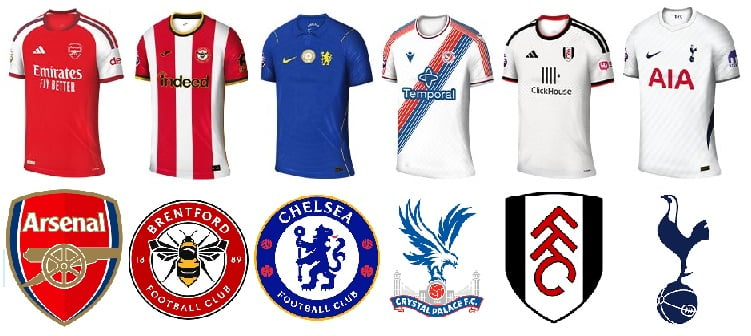



The Premier League doesn’t just have a reputation for being the best-watched football competition in the world; it’s also widely considered the hardest to predict. Season after season, clubs rise, fall, regroup, and surprise, often when least expected.
And, while other leagues tend to follow a familiar script, the Premier League delivers nothing but uncertainty. But the question is why. What actually makes it so relentlessly competitive? Keep reading to find out!
There’s Money Everywhere
One of the biggest reasons is pretty simple: money is spread far more evenly than in most leagues. Thanks to massive broadcast deals, even clubs near the bottom of the table receive financial distributions that would make mid-table teams elsewhere envious. This means newly promoted sides can invest immediately instead of merely surviving.
That financial muscle shows up in squad depth. A club sitting 15th can field internationals, rotate quality players, and absorb injuries without completely falling apart. When almost every team has resources, mismatches become rare, and even little contenders can’t afford off days.
No Easy Away Trips
In many leagues, a handful of away fixtures are considered “bankable” wins. In England, that simply doesn’t exist, and tight stadiums, hostile crowds, and fast pitches make every ground a challenge. Even teams fighting relegation are capable of turning home matches into battles.
It’s why shock results feel less like shocks and more like reminders. Midweek fixtures in cold northern cities or early kick-offs after European travel regularly undo the best-laid plans of elite clubs.
Tactical Variety
The Premier League is a tactical melting pot. Managers arrive from Spain, Germany, Italy, Portugal, and more, each bringing different philosophies with them. High-pressing systems sit alongside low blocks, possession-heavy sides face counter-attacking specialists, and teams are forced to adapt their gameplay every week.
This constant tactical contrast means dominance is very hard to maintain. A system that dismantles one opponent may look blunt against the next, and managers who can’t adjust quickly often find themselves exposed, regardless of their reputation.
Relentless Schedule
English football offers very little breathing room. Domestic cups, league matches, European competitions, and international breaks collide into an unforgiving calendar, and this means squad rotation isn’t a luxury; it’s essential.

This workload compresses the margin for error. Injuries accumulate, fatigue creeps in, and momentum swings rapidly. Clubs without genuine depth struggle to keep standards high across multiple competitions, while even top sides are vulnerable during congested periods.
Promotion and Relegation Pressure
The stakes at both ends of the table are enormous. Promotion transforms clubs financially and culturally, while relegation can unravel years of planning. Knowing this adds pressure to every fixture.
Relegation-threatened teams often become harder to play against as the season progresses. Matches turn physical, tactical discipline tightens, and desperation fuels performances that don’t reflect league position. For clubs chasing titles or European places, these games are never straightforward.
A Global Talent Pool
The Premier League’s global appeal allows clubs to recruit from almost anywhere. This means South American flair, European structure, African athleticism and local academy products can all coexist in the same starting elevens.
This diversity raises the overall quality of the league and reduces unpredictability. Players arrive with different strengths and styles, creating match-ups that don’t always favour the bigger names. It also means stars can emerge quickly, and just as quickly be replaced if they leave.

Uncertainty Fuels the Drama
Unlike leagues dominated by two or three superclubs, the Premier League regularly reshuffles its hierarchy. Champions one season can struggle the next, mid-table teams can push for Europe with the right run, and newly promoted sides can stay up comfortably or even thrive.
That volatility is exactly why fans, analysts and punters remain so transfixed. Outcomes are never predetermined, and form matters as much as history. Anyone following the league closely understands that context, momentum, and match-ups regularly outweigh reputations.
For those tracking fixtures, form, and odds week to week, the competitiveness of the league is a huge part of the appeal. Platforms that cover fixtures and markets in depth, such as Premier League betting insights, show just how finely balanced the competition has become.
Final Thoughts
The Premier League’s competitiveness isn’t accidental; it’s the result of financial distribution, cultural intensity, tactical diversity, and relentless pressure. Every club has something to play for, and very few matches are deemed meaningless. That’s why the league continues to captivate audiences all over the world. Not because it’s predictable or polished, but because it’s chaotic and brutally fair. On any given weekend, anyone can beat anyone, and more often than not, someone does.