

For the best part of a decade, the World Cup’s all-time scoring chart had a settled, almost untouchable look. Miroslav Klose sat alone at the summit on 16 goals, a record built not on fireworks but on remorseless consistency across four tournaments from 2002 to 2014. Then the 2026 finals arrived in North America, and within a matter of days the history books were being rewritten in real time.
The man doing the rewriting, fittingly, is Lionel Messi. Argentina’s captain began the tournament on 13 World Cup goals, level with France’s Just Fontaine and seemingly destined to bow out just short of the summit. A first-half hat-trick against Algeria on 16 June, the first treble of his World Cup career, changed all of that. Those three strikes carried Messi to 16 and level with Klose at the very top of the all-time list, a landmark few would have predicted when he finally lifted the trophy in Qatar four years ago.
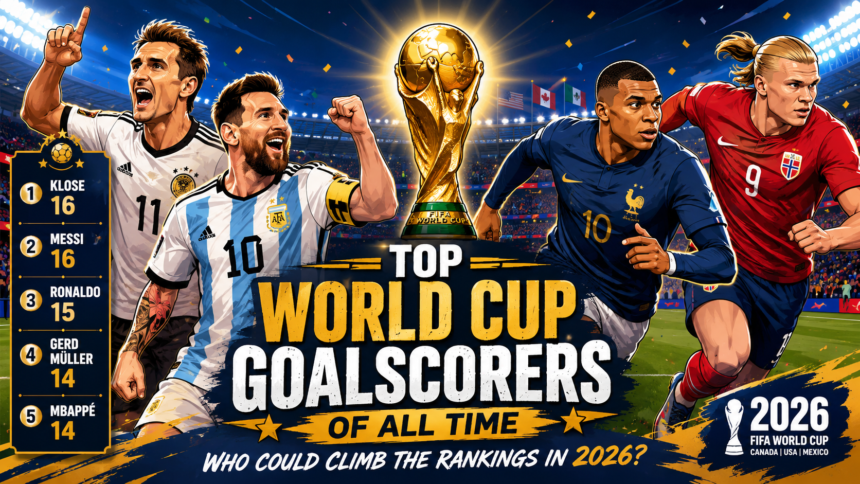
Here is how the all-time chart looks as the group stage unfolds:
- Miroslav Klose (Germany): 16 goals
- Lionel Messi (Argentina): 16 goals
- Ronaldo (Brazil): 15 goals
- Gerd Müller (West Germany): 14 goals
- Kylian Mbappé (France): 14 goals
- Just Fontaine (France): 13 goals
- Pelé (Brazil): 12 goals
- Jürgen Klinsmann (Germany): 11 goals
Messi is not the only active great climbing fast. Kylian Mbappé, still only 27, opened his 2026 account with a clinical double in France’s 3-1 win over Senegal, lifting him to 14 and level with the great Gerd Müller. The Frenchman now has 14 goals from just three tournament appearances, a strike rate that puts both Klose’s record and Messi’s tally firmly within range before this summer is out, never mind whatever he adds in 2030.
The names beneath them read like a roll call of the tournament’s history. Brazil’s Ronaldo, “O Fenômeno”, reached 15 across three finals, crowned by his redemption double in the 2002 final against Germany. Müller needed only two tournaments to plunder 14. Fontaine, though, remains a category of his own: all 13 of his goals came at a single World Cup, Sweden 1958, a single-edition record that even this expanded 104-match format looks unlikely to threaten. Pelé, on 12, rounds off a top group spanning seven decades of the game.
With the biggest edition in the competition’s history now in full flow, there is plenty of wider context to get across. This Complete guide to the 2026 World Cup runs through the expanded format, the schedule and the leading contenders, while the official FIFA tournament hub carries every confirmed result and fixture as they land.
Who could climb the list in 2026?
The expanded format, with the eventual champions now playing eight matches rather than seven, hands the modern marksmen more opportunities than any previous generation enjoyed. Messi and Mbappé are the obvious candidates to keep rising, but they are far from the only names in the conversation.
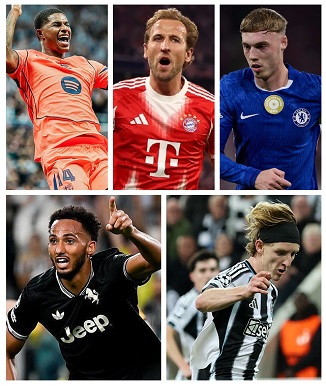
Cristiano Ronaldo, at 41 and contesting a record sixth World Cup, carries 8 goals into Portugal’s campaign along with a burning desire to finally make his mark on the one stage that has consistently eluded him. Harry Kane, the 2018 Golden Boot winner and in the goalscoring form of his life at Bayern Munich, also begins on 8 and will fancy a deep England run to push him up the order. Erling Haaland, meanwhile, announced his long-awaited World Cup arrival with a debut double against Iraq, and should Norway’s dark-horse run gather momentum, the prolific striker could rise rapidly.
The younger generation is stirring too. Folarin Balogun seized his moment with an early brace for the United States, while the likes of Vinícius Júnior, Ousmane Dembélé and teenage sensation Lamine Yamal all carry the talent to turn one hot streak into a permanent place in the record books. For the full picture of every milestone in play across North America, our 2026 World Cup coverage is tracking it match by match.
What once looked like an unassailable record now feels gloriously vulnerable. Messi has caught Klose, Mbappé is closing in fast, and a clutch of others are circling beneath them. For the first time in years, the question is not whether the all-time list will change, but how often and by whose hand. By the time the trophy is lifted in New York on 19 July, the order at the very top could look different again.