
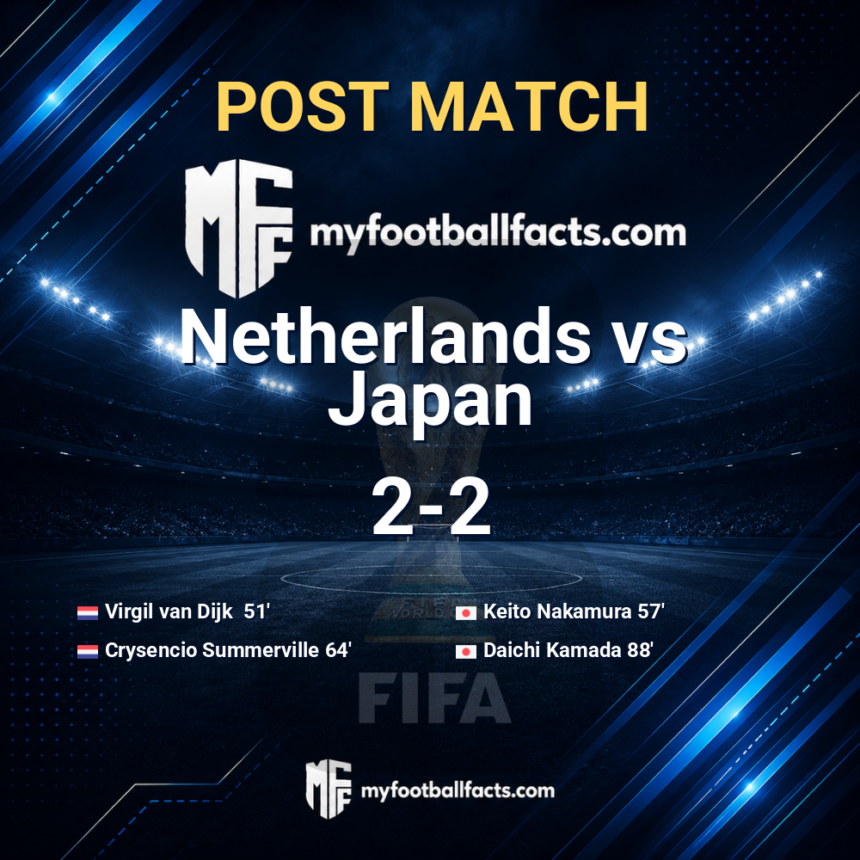
POST MATCH
Netherlands 2-2 Japan Post Match Review
Match Summary
In a thrilling encounter at Dallas Stadium, the Netherlands and Japan played out a dramatic 2-2 draw in their World Cup clash. The match saw the Dutch take the lead early in the second half through Virgil van Dijk, who capitalised on a well-placed assist from Ryan Gravenberch. However, Japan responded swiftly, with Keito Nakamura equalising just six minutes later, showcasing their resilience and attacking prowess.
The Netherlands regained the advantage shortly after, as Crysencio Summerville found the net, again assisted by Gravenberch, making it 2-1. With the Dutch seemingly in control, Japan refused to back down and continued to press forward. Their determination paid off in the dying minutes when Daichi Kamada scored the equaliser, assisted by Koki Ogawa, ensuring both teams shared the spoils in a match that ebbed and flowed with intensity.
The draw leaves both teams with much to ponder as they look ahead in the tournament. The Netherlands, despite their possession dominance, will feel they missed an opportunity to secure all three points, while Japan will take heart from their spirited comeback, demonstrating their capability to compete at the highest level.
Match Statistics
The match statistics reveal a closely contested battle, with the Netherlands enjoying 60% possession compared to Japan's 40%. Both teams registered ten shots, but the Dutch were more accurate, hitting the target six times against Japan's three. This suggests that while the Netherlands controlled the ball, Japan's efficiency in front of goal was commendable, particularly in their ability to convert key chances into goals.
Defensively, both sides exhibited discipline, with the Netherlands committing seven fouls and receiving three yellow cards, while Japan matched them with seven fouls but avoided any bookings. The balance of corners was slightly in favour of the Dutch, who earned five to Japan's four, indicating a slight edge in creating set-piece opportunities.
Goals and Assists
The scoring opened in the 51st minute when Virgil van Dijk headed home from a corner, expertly assisted by Ryan Gravenberch. Just six minutes later, Japan struck back through Keito Nakamura, who finished off a swift counter-attack initiated by Takefusa Kubo. The Netherlands regained the lead in the 64th minute, with Crysencio Summerville netting his goal, again with Gravenberch providing the assist. The match reached its climax in the 88th minute when Daichi Kamada found the back of the net, equalising for Japan with a well-placed shot after a clever setup from Koki Ogawa.
How the Match Was Won
The match was characterised by momentum swings that kept fans on the edge of their seats. After taking the lead, the Netherlands appeared to have the upper hand, particularly with their midfield orchestrating play effectively. However, Japan's quick equaliser demonstrated their tactical adaptability and willingness to exploit any defensive lapses from the Dutch.
As the game progressed, the substitutions made by both teams were crucial. Japan's fresh legs and tactical changes allowed them to maintain pressure late in the game, culminating in Kamada's equaliser. The Netherlands, while initially dominant, struggled to maintain their composure under Japan's relentless pursuit, ultimately leading to a shared result.
Key Moments Timeline
The key moments of the match encapsulated the ebb and flow of the game, with each goal shifting the momentum. From Van Dijk's opener to Kamada's late equaliser, the match was filled with pivotal incidents that defined the outcome.
Lineups and Tactical Shape
Netherlands Tactical Shape
The Netherlands lined up in a 4-3-3 formation, featuring Bart Verbruggen in goal and a solid back four anchored by Virgil van Dijk. The midfield trio, including Ryan Gravenberch, was pivotal in both defensive duties and transitioning the ball forward, while the attacking trio aimed to exploit Japan's defensive structure.
Formation: 4-3-3
Japan Tactical Shape
Japan adopted a 3-4-2-1 formation, with Zion Suzuki in goal and a three-man defence led by Shogo Taniguchi. The midfield four provided both width and support to the attack, allowing for quick transitions and counter-attacks, which were evident in their equalising goals.
Formation: 3-4-2-1
Tactical Story of the Match
Tactically, the Netherlands aimed to dominate possession, utilising their midfield to control the game's tempo. Their approach involved building from the back and creating overloads on the flanks, which initially paid off with their first goal. However, Japan's tactical flexibility allowed them to absorb pressure and counter effectively, exploiting spaces left by the Dutch as they pushed forward.
Japan's strategy relied on quick transitions and maintaining a compact shape defensively. Their ability to quickly shift from defence to attack was crucial, particularly in their equalising goals, showcasing their tactical discipline and readiness to capitalise on any defensive errors from the Netherlands.
Player Impact
Virgil van Dijk was instrumental for the Netherlands, not only scoring the opening goal but also providing leadership at the back. His defensive prowess was vital in maintaining the team's structure, even as Japan pressed for an equaliser. Ryan Gravenberch emerged as a key playmaker, assisting both of the Dutch goals and demonstrating his vision and technical ability throughout the match.
For Japan, Keito Nakamura's equaliser was a testament to his composure and skill, while Daichi Kamada's late goal highlighted his knack for being in the right place at the right time. Koki Ogawa also played a significant role, providing the assist for Kamada's crucial goal, showcasing Japan's depth in attacking options. The substitutions made by Japan added fresh energy and tactical variations that ultimately contributed to their comeback.
Crysencio Summerville's performance was notable as well, scoring the second goal for the Netherlands and showing his ability to impact the game positively. However, his yellow card could have been a factor in his later substitution, as the Dutch sought to maintain discipline in the closing stages.
Updated Form Guide
The Netherlands' recent form has been mixed, with two wins, a loss, and a draw in their last four matches. This draw against Japan may leave them feeling they missed a chance to build momentum, especially after a recent win against Uzbekistan. Conversely, Japan's form has been impressive, with four consecutive victories leading up to this match, and their ability to secure a draw against a strong Dutch side will bolster their confidence moving forward.
Netherlands
Japan
What’s Next for Both Teams?
The Netherlands will look to regroup and refine their tactics ahead of their next fixture, where they will aim to secure a vital win to boost their World Cup campaign. With their next match on the horizon, they will need to address their defensive vulnerabilities to avoid similar late-game collapses.
Japan, buoyed by their performance against the Netherlands, will seek to build on this momentum in their upcoming match. Their ability to come back from behind will serve as a confidence booster, and they will aim to carry this fighting spirit into their next encounter as they pursue advancement in the tournament.
What the Result Means
This draw holds significant implications for both teams. For the Netherlands, it serves as a reminder of the importance of maintaining focus throughout the match, particularly in the closing stages. The inability to secure a win may affect their confidence as they navigate the tournament.
For Japan, the result reinforces their status as a competitive side on the world stage. Their resilience in coming back from behind against a strong opponent will enhance their belief and cohesion as they continue their World Cup journey.
MyFootballPicks Man of the Match
Virgil van Dijk was named MyFootballPicks Man of the Match for his commanding presence at the back and his crucial goal that set the tone for the Netherlands. His leadership and defensive skills were pivotal in the Dutch performance, even as they faced late pressure from Japan.
Full-Time Whistle
As the final whistle blew, the 2-2 draw encapsulated the spirit of the World Cup, with both teams showcasing their quality and determination. The match will be remembered for its dramatic twists and turns, leaving fans eagerly anticipating the next chapter in this tournament.