

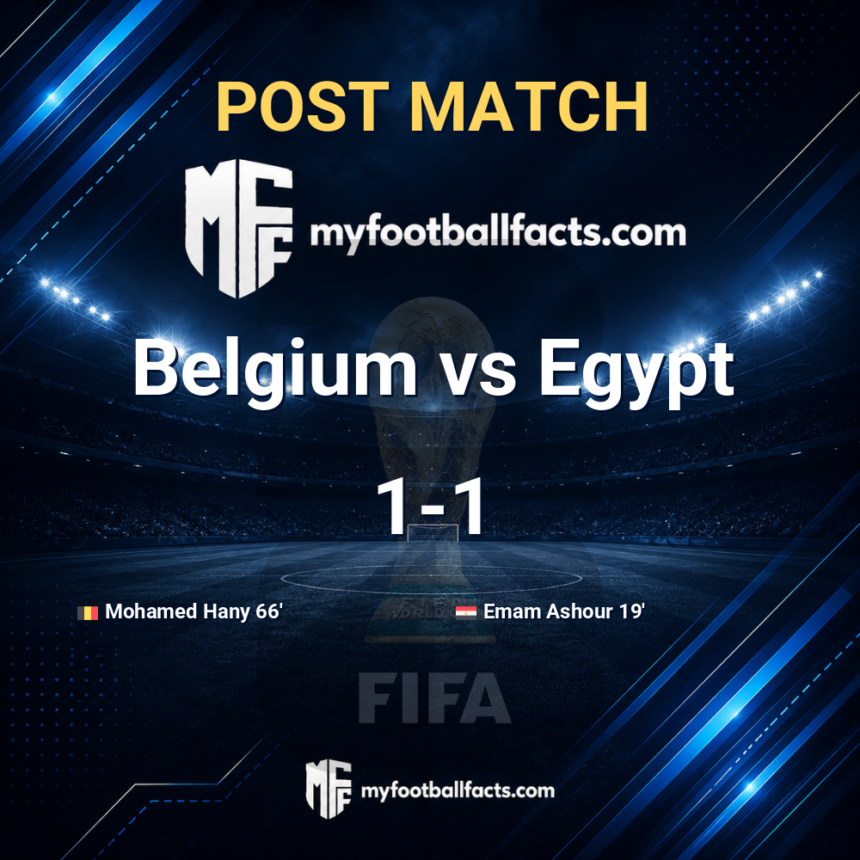
POST MATCH
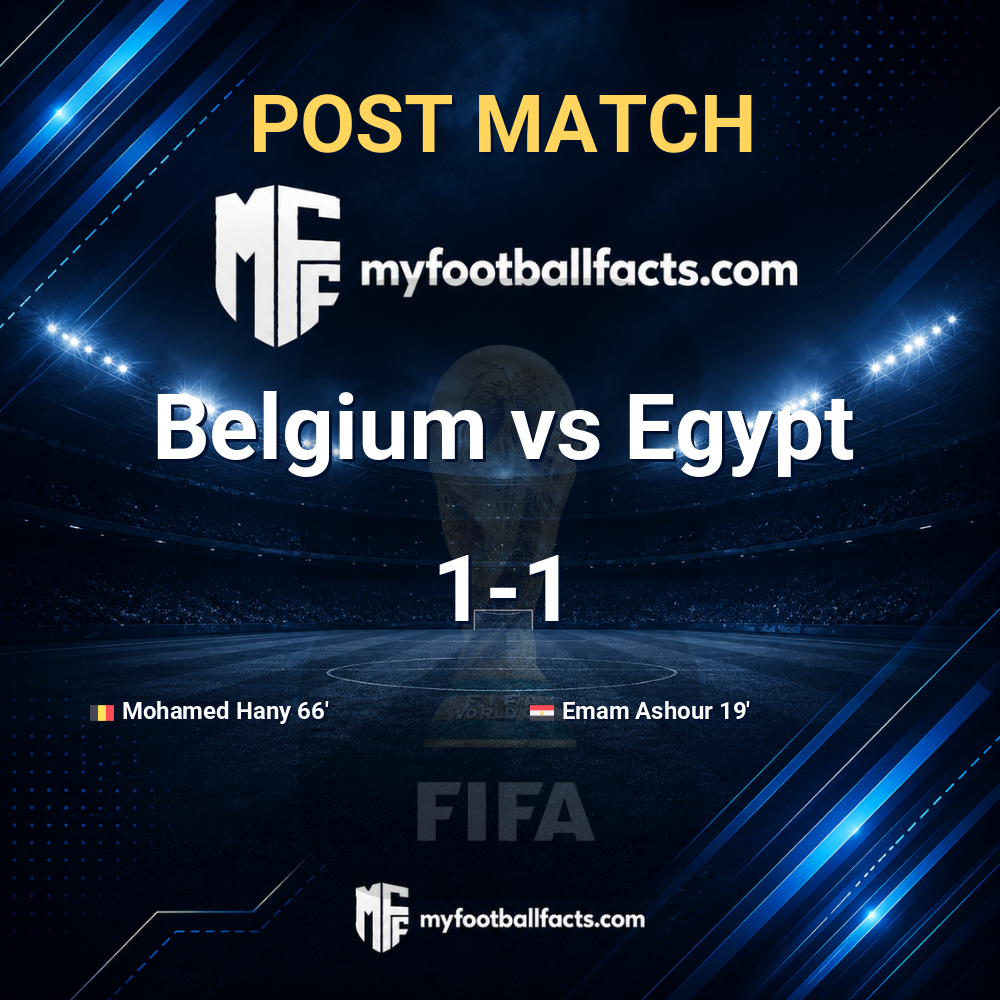
Belgium 1-1 Egypt Post Match Review
Match Summary
In a tightly contested World Cup clash at Seattle Stadium, Belgium and Egypt played to a 1-1 draw, with both teams showcasing their tactical prowess. Egypt struck first in the 19th minute when Emam Ashour capitalised on a swift counter-attack, receiving a precise assist from Mohamed Salah to put his side ahead. Belgium, despite enjoying slightly more possession, struggled to break down a resolute Egyptian defence in the first half, trailing at the break as they sought to find their rhythm.
The second half saw Belgium ramp up their efforts, and their persistence paid off in the 66th minute when Mohamed Hany inadvertently turned the ball into his own net, equalising for Belgium. This goal shifted the momentum, as Belgium pressed for a winner, but Egypt remained resilient, absorbing pressure and looking to exploit counter-attacking opportunities. The match concluded with both teams sharing the spoils, reflecting a balanced encounter where each side had its moments.
With the draw, Belgium maintained their unbeaten run in the tournament, while Egypt showcased their defensive capabilities and attacking threat, particularly through Salah and Ashour. The result leaves both teams with a sense of optimism as they look ahead in the competition, knowing they can compete at this level.
Match Statistics
The match statistics reveal a closely fought battle, with Belgium marginally edging possession at 54% compared to Egypt's 46%. Both teams were evenly matched in terms of shots, with Belgium registering 15 attempts to Egypt's 14, but both sides managed only three shots on target, indicating a lack of clear-cut chances despite the attacking intent.
Discipline was a notable aspect of the match, with both teams committing 15 fouls and receiving two yellow cards each. Egypt's ability to win seven corners compared to Belgium's two suggests they were effective in creating set-piece opportunities, while Belgium's defensive work was tested throughout the match, particularly during Egypt's counter-attacks.
Goals and Assists
Emam Ashour opened the scoring for Egypt in the 19th minute, expertly finishing a move initiated by Mohamed Salah, who provided the assist. This early goal set the tone for Egypt's defensive strategy, as they sought to protect their lead. However, Belgium found their equaliser in the 66th minute through an own goal by Mohamed Hany, who inadvertently diverted the ball into his own net while attempting to clear a cross, bringing the score to 1-1.
How the Match Was Won
The match's turning point came with Belgium's equaliser, which shifted the momentum in their favour. Following the own goal, Belgium intensified their attacking efforts, creating several opportunities as they sought to capitalise on their newfound momentum. However, Egypt's disciplined defensive structure, combined with their ability to counter-attack, kept the match finely balanced.
Despite Belgium's attempts to find a winner, including the introduction of fresh legs from their bench, Egypt's resilience and tactical discipline ensured they held on for a draw. The match highlighted the importance of defensive organisation and the ability to absorb pressure while remaining a threat on the counter.
Key Moments Timeline
The match was punctuated by key moments that shaped the flow of play, including early yellow cards that set a competitive tone. The goals were pivotal, with Ashour's opener giving Egypt confidence, while Hany's own goal shifted the dynamics in Belgium's favour. These incidents, along with tactical substitutions, played a crucial role in the match's outcome.
Lineups and Tactical Shape
Belgium Tactical Shape
Belgium lined up in a 4-2-3-1 formation, with Thibaut Courtois in goal and a back four consisting of Maxim De Cuyper, Brandon Mechele, Arthur Theate, and Thomas Meunier. Axel Witsel and Kevin De Bruyne anchored the midfield, while Romelu Lukaku led the attack supported by Leandro Trossard and Jérémy Doku on the flanks. Substitutions in the second half aimed to inject fresh energy into the midfield and attack.
Formation: 4-2-3-1
Egypt Tactical Shape
Egypt also adopted a 4-2-3-1 formation, featuring Mohamed El Shenawy in goal and a defensive line comprising Mohamed Hany, Hossam Abdelmaguid, Ramy Rabia, and Ahmed Fatouh. Emam Ashour and Hamza Abdelkarim operated in midfield, with Mohamed Salah playing a pivotal role in attack alongside Mahmoud Trezeguet and Mostafa Mohamed Zaki Abdelraouf. Tactical substitutions were made to maintain defensive solidity and exploit counter-attacking opportunities.
Formation: 4-2-3-1
Tactical Story of the Match
The match unfolded with Egypt adopting a compact defensive shape, looking to frustrate Belgium's attempts to break through. Their strategy paid off early when Ashour's goal gave them a lead, allowing them to sit deeper and invite pressure. Belgium, on the other hand, struggled to find their rhythm in the first half, often resorting to long-range efforts that failed to trouble the Egyptian goalkeeper.
In the second half, Belgium adjusted their approach, pushing more players forward and increasing their attacking intensity. This shift in tactics ultimately led to the equalising goal, but Egypt's disciplined defence remained resolute, demonstrating their ability to absorb pressure and counter effectively. The tactical battle highlighted the importance of adaptability and resilience in high-stakes matches.
Player Impact
Emam Ashour was instrumental for Egypt, not only scoring the opening goal but also contributing significantly to their midfield stability. His ability to link play and press effectively was crucial in maintaining Egypt's shape and disrupting Belgium's rhythm. Mohamed Salah's assist showcased his vision and creativity, as he played a key role in Egypt's attacking transitions.
For Belgium, the introduction of substitutes like Charles De Ketelaere aimed to inject fresh attacking impetus, but they struggled to convert their possession into clear chances. Kevin De Bruyne's presence in midfield was vital, as he attempted to orchestrate play and create openings, although he was often met with a well-organised Egyptian defence. The defensive efforts of Belgium's backline, particularly in dealing with Egypt's counter-attacks, were commendable, ensuring they remained competitive throughout the match.
Updated Form Guide
Belgium's draw against Egypt follows a series of strong performances, including a commanding 5-0 victory over Tunisia and a solid win against Croatia. They remain unbeaten in the tournament, suggesting a growing confidence as they progress. Egypt, on the other hand, will take heart from their performance, particularly after a tough loss to Brazil, and their ability to secure a draw against a strong side like Belgium could provide a much-needed boost to their morale.
Belgium
Egypt
What’s Next for Both Teams?
Belgium will look to build on this result in their next fixture, aiming to secure a win that could solidify their position in the knockout stages. With their attacking talent and solid form, they will be keen to convert possession into goals. Egypt, meanwhile, will seek to harness the confidence gained from this draw as they prepare for their upcoming match, where they will aim to exploit their counter-attacking strengths and secure vital points in the group stage.
What the Result Means
The draw holds significant implications for both teams as they navigate the World Cup group stage. For Belgium, it reinforces their status as a competitive side, maintaining their unbeaten run and showcasing their ability to respond to adversity. Egypt, on the other hand, can take pride in their performance, demonstrating resilience and tactical discipline, which could serve as a foundation for their upcoming challenges in the tournament.
MyFootballPicks Man of the Match
Emam Ashour was named MyFootballPicks Man of the Match for his standout performance, which included scoring the opening goal and providing a dynamic presence in midfield. His contributions were pivotal in Egypt's strategy, and his ability to influence the game was evident throughout the match.
Full-Time Whistle
As the final whistle blew, both teams left the pitch with a sense of accomplishment, having battled fiercely in a match that showcased the best of World Cup football. The draw reflected the competitive nature of the tournament, with both Belgium and Egypt demonstrating their capabilities and setting the stage for an exciting continuation of their World Cup journeys.