














The Footballers Who Played at the Top — and Died in World War II
If World War I shattered Edwardian football, World War II tore through an already wounded game.
By September 1939, football in England was once again suspended. Stadiums were closed, clubs fragmented, and players scattered across military units, factories, and airfields. Wartime leagues existed, but they were unofficial — survival mattered more than results.
For many footballers, World War II was not their first experience of conflict. Some had grown up in the shadow of the Great War. Others had already served during it as boys.
Once again, footballers answered the call.
Once again, some never returned.
📊 Footballers Killed in World War II – At a Glance
| Player | Club | Position | Age | Date of Death | Cause / Location |
|---|---|---|---|---|---|
| Harry Goslin | Bolton Wanderers | Wing-half | 34 | 18 Dec 1943 | Killed in action, Italy |
| Berry Nieuwenhuys | Liverpool | Forward | 27 | 1943 | Aircraft accident |
| Bob Baxter | Middlesbrough | Defender | 30 | 1941 | Air raid, UK |
| Duncan McKenzie | Arsenal (staff) | Former player | 27 | 1940 | Dunkirk campaign |
⚪ Harry Goslin – Bolton Wanderers
The Captain Who Led His Men Into War
Harry Goslin was more than just a footballer — he was a leader in every sense of the word.
A tough, intelligent wing-half, Goslin captained Bolton Wanderers during the late 1930s, earning respect for his authority on the pitch and his calm presence off it.
When war broke out in 1939, Goslin did not hesitate. He famously led a group of Bolton players to enlist together, setting an example that echoed across English football.
Unlike many footballers who served at home, Goslin was commissioned as an officer in the British Army and deployed overseas.
By 1943, he was fighting in the Italian Campaign, a brutal and often overlooked theatre of the war, marked by mountainous terrain, entrenched German positions, and relentless fighting.
On 18 December 1943, during operations near the River Sangro, Harry Goslin was killed in action.
He was 34 years old.
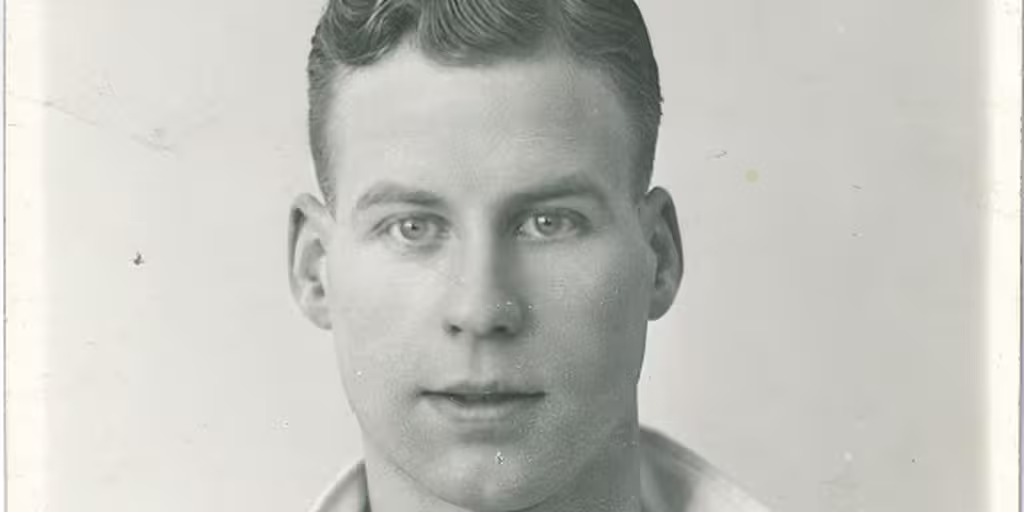
Harry Goslin – Service Summary
| Detail | Information |
|---|---|
| Club | Bolton Wanderers |
| Position | Wing-half |
| Role | British Army Officer |
| Age at Death | 34 |
| Date | 18 December 1943 |
| Location | Italy |
Legacy:
Bolton Wanderers continue to honour Goslin as one of the club’s greatest servants — not just for his football, but for his leadership in wartime.
🔴 Berry “Hekkie” Nieuwenhuys – Liverpool
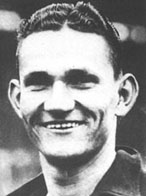
A Forward Lost in the Skies of World War II
Berry Nieuwenhuys represented a changing face of English football.
A South African international forward, he joined Liverpool in the late 1930s, bringing pace, power, and a more modern attacking style to the English game.
His Liverpool career was brief. War arrived before it could truly begin.
Nieuwenhuys returned to military service with the South African Air Force, where he trained as aircrew — a role with one of the highest casualty rates of the entire war.
In 1943, while on active service, Nieuwenhuys was killed in an aircraft accident.
He was just 27 years old.
Berry Nieuwenhuys – Service Summary
| Detail | Information |
|---|---|
| Club | Liverpool |
| Position | Forward |
| Military Service | South African Air Force |
| Age at Death | 27 |
| Year | 1943 |
| Cause | Aircraft accident |
Legacy:
Nieuwenhuys’ death is a reminder that WWII expanded the battlefield beyond trenches — into the skies, the seas, and the home front.
🔵 Bob Baxter – Middlesbrough
Killed at Home During the Blitz
Not every footballer died overseas.
Bob Baxter was a First Division defender with Middlesbrough when war broke out. Like many players, he remained in Britain, contributing to the war effort while football operated in fragmented regional competitions.
During the Blitz, German bombing raids targeted industrial towns across England.
In 1941, Baxter was killed during an air raid.
He was 30 years old.
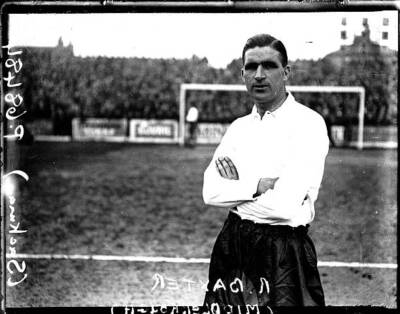
Bob Baxter – Service Summary
| Detail | Information |
|---|---|
| Club | Middlesbrough |
| Position | Defender |
| Age at Death | 30 |
| Year | 1941 |
| Cause | Air raid (UK) |
Legacy:
Baxter’s death underlines a stark WWII reality — footballers were not just soldiers; they were civilians under fire at home.
🔴 Duncan McKenzie – Arsenal
A Life Lost During Britain’s Darkest Hour
Duncan McKenzie had been associated with Arsenal as a player before the war and later worked within the club structure.
In 1940, Britain faced one of its most desperate moments — the evacuation of Dunkirk.
McKenzie was serving with the British Army during the campaign.
He was killed during operations connected to Dunkirk, one of thousands of lives lost during the chaotic retreat.
Duncan McKenzie – Service Summary
| Detail | Information |
|---|---|
| Club | Arsenal |
| Role | Former player / staff |
| Age at Death | 27 |
| Year | 1940 |
| Location | France |
⚔️ Football Under Fire: The Cost of Two Wars
Combined Impact on English Football
| War | Years | Football Status | Players Lost |
|---|---|---|---|
| World War I | 1914–1918 | Suspended 1915–1919 | Dozens of professionals |
| World War II | 1939–1945 | Suspended 1939–1946 | Players killed worldwide |
Across both wars:
- Footballers served as infantrymen, gunners, pilots, officers
- Some died instantly
- Some died of wounds
- Some were killed at home
- Some never played again even if they survived
🕊️ Why This Story Matters Now
Football is often described as an escape from the real world.
History shows that it never has been.
In times when war once again dominates global headlines, football’s past reminds us that the game has always been shaped by conflict, sacrifice, and loss.
These players didn’t retire.
They didn’t transfer.
They didn’t miss matches.
They were lost to history — and to football.
⚽ Final Whistle
When football resumed after each war, crowds returned and records were broken.
But the teams were never complete.
The true cost of war is not only measured in battles won or lost — but in careers never finished, goals never scored, and players who never came home.

About the author: Martin Graham
Martin Graham is a football journalist and writer with extensive experience covering the world's most popular sport. He specialises in football news, match analysis, player features and historical football content, with a particular interest in international tournaments and the game's biggest stories. His writing combines detailed research with a clear, engaging style, making complex football topics accessible to a wide…