



Martin O'Neill: Celtic manager lands permanent deal at 74 after double-winning return
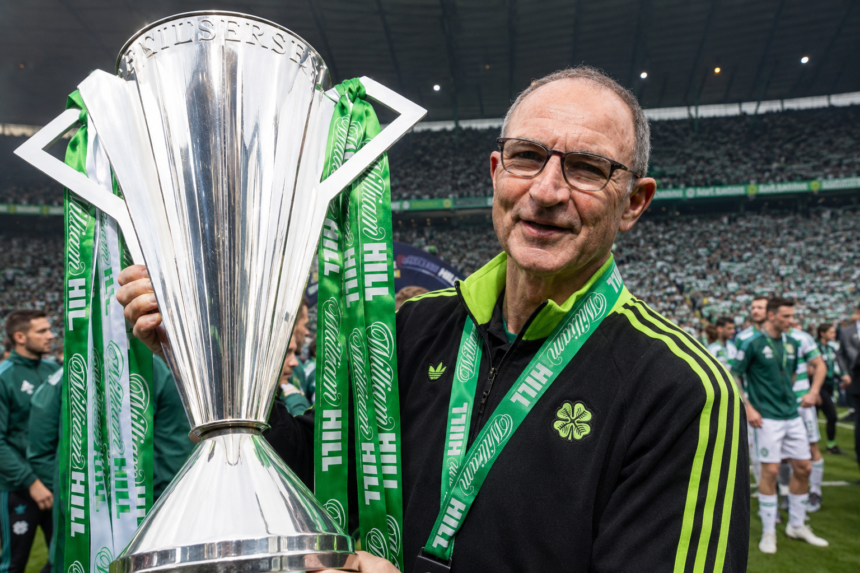
Martin O'Neill has been confirmed as Celtic's permanent manager, ending months of uncertainty at Parkhead and rewarding the veteran who twice stepped in to rescue the club's campaign last season. The 74-year-old has put pen to paper on a one-year contract that carries the option of a further 12 months, with his appointment following talks between O'Neill and the club's principal shareholder, Dermot Desmond.
The deal marks a remarkable fourth chapter in O'Neill's relationship with Celtic. More than two decades on from a hugely successful first reign in Glasgow, he now returns on a substantive basis having already delivered a domestic double from the dugout in a season few will forget. His established coaching team is expected to stay alongside him, with assistant Shaun Maloney joined by Mark Fotheringham and Gavin Strachan.
From emergency stand-in to permanent boss
O'Neill's path back into the hot seat was anything but conventional. When Brendan Rodgers resigned suddenly last October, the call went out to a man who had not managed the club since 2005 — and who many assumed had long since stepped away from the front line. Taking charge on an interim basis, O'Neill responded by winning every league fixture he oversaw, wiping out an eight-point deficit to Hearts and reaching the League Cup final after seeing off Rangers along the way.
He then stood aside to allow Wilfried Nancy to take over, only for the Frenchman's tenure to collapse after just 33 days of what had been a two-and-a-half-year contract. By the time O'Neill was recalled in early January, Celtic had drifted six points adrift of Hearts, seen Rangers pull level on points and lost the League Cup final. The situation looked bleak.
A double against the odds
What followed restored order. O'Neill steadied the dressing room, navigated a tricky January transfer window and helped ease tension that had built between supporters and the boardroom. On the pitch, he gradually closed the gap on Hearts before edging them out on the final day of the season to land the Scottish Premiership title in dramatic fashion.
The Scottish Cup soon followed. At Hampden Park, O'Neill guided Celtic past a side managed by his own former captain, Neil Lennon, to complete a domestic double that had seemed implausible only months earlier. Those two trophies added to the seven he collected during his first spell between 2000 and 2005 — a haul that included three league titles, three Scottish Cups and a League Cup.
The controversy that shaped the appointment
O'Neill's confirmation came only after Celtic explored an alternative. Robbie Keane, the Republic of Ireland's record goalscorer and a former loanee at the club, had emerged as a leading candidate following his own conversations with Desmond. The prospect, however, drew significant opposition from sections of the support.
Much of the unease centred on Keane's previous role with Maccabi Tel Aviv and his decision to remain in Israel after the conflict in Gaza began. A large number of supporters' groups reportedly backed a statement against the move, and banners and graffiti opposing his potential arrival appeared near Celtic Park. With fan sentiment hardening, the board turned to the manager who had already proved his worth.
An era of dominance to protect
O'Neill inherits a club at the summit of Scottish football's historical record. For decades Rangers held the edge in league titles, but that advantage has been steadily eroded. The pair drew level on 55 Scottish league championships at the end of the 2024/25 season before Celtic's latest triumph nudged them clear on 56 — and into outright ownership of the bragging rights.
The scale of recent dominance is striking. Since 2000, Celtic have lifted the league title 20 times against Rangers' six, a generation of supremacy that O'Neill is now charged with extending.
The challenge ahead
Not everyone is convinced the workload suits a manager in his mid-70s. Former Celtic midfielder Stiliyan Petrov admitted surprise that the club had not handed his old boss a less demanding role, though he backed O'Neill to deliver and warned that the coming campaign will be far tougher. Rangers are expected to strengthen, Hearts will fancy another push, and Celtic must perform on the European stage as well as at home.
O'Neill, for his part, has spoken of his pride at being asked to continue and of an appetite for more of the days that lit up last season. The short-term nature of the deal points to a club seeking stability rather than a long-term plan, but for now the Martin O'Neill Celtic manager appointment carries one simple message: the man who saved the season has been trusted to build on it.