




Up until the 31st of March this year, over 200 countries which are party to FIFA had the chance to put their best foot forward and make it to the World Cup. As expected, this resulted in very heated matches where teams did all they could to ensure they got their foot in the door. Punters were quick to capitalise on this by betting on the teams with the best odds. Now that the matches have ended and we are heading to the final matches that will determine the FIFA winner, punters have turned their attention to World Cup betting. Interestingly, most of their decisions have been tied to the results of the Qualification Stage. We let you in on why these past matches matter and how punters are using them to decide which teams to back in the coming month.
Understanding the Qualification Stage
Even though this year’s World Cup will offer a platform to 48 countries, this number is still much lower than the total number of FIFA’s member nations. After all, there are more than 200 countries that would love to walk away as the winners. So, to ensure that every country has a fair chance, FIFA holds a qualification stage before the World Cup where every country gets to prove why it deserves a spotlight.
The qualification stage takes place as a series of matches that are set per region, which go by different names such as CAF in Africa and UEFA in Europe, and so on. For instance, in the UEFA Champions League, participating countries get to engage in group stages before moving on to the playoffs. The top teams from each region progress to the global scene and, therefore, the World Cup.
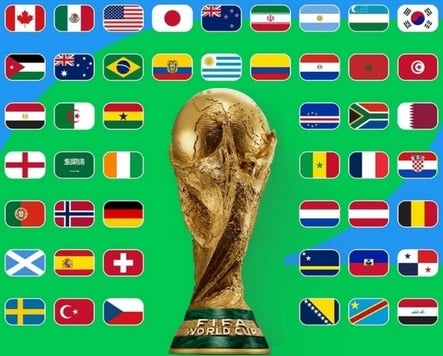
It helps to note that this year, FIFA increased the number of final teams to 48, while it had been 32 in the past. This expansion resulted in more slots for each participating region, such that in the end, we ended up with the following numbers:
- 16 slots for Europe.
- 9 slots for Africa.
- 8 slots for Asia.
- 6 slots for South America.
- 6 slots for North and Central America – 3 belong to the host countries.
- 1 slot for Oceania.
Additionally, there were 2 playoff spots, thus bringing the total number of teams to 48.
Why Does the Qualification Stage Matter to Punters?
The qualification stage might have decided who gets to play in the World Cup, but the truth is that it does much more than that. In fact, instead of punters relying heavily on past FIFA tournaments, they have leaned on this qualification stage as it offers them more recent information on the teams, and thus has affected the following:
Their Understanding of Current Odds
Each time teams went head-to-head, bookies were able to gauge their performance and adjust their odds accordingly in preparation for the World Cup. As a result, the teams that were seen to be very dominant in their groups now have very good odds, while those that were seen struggling have worse odds of winning. While it is entirely possible that teams can better their form before the main matches kick off, most punters are basing their decisions on the qualification stage performances.
Their Assessment of Players
The qualification stage served as a preview of the main event. After all, teams had their best players on the fields and punters thus got the treat of seeing the players that were in their peak forms, as well as those who were not doing very well. They even got to witness as star players got injured. As such, they are not walking into the main matches without prior knowledge and are using the information they gained from the qualifiers to determine which players to back.
Their Perceptions of Regions
At the end of the day, punters, just like with any person, have subjective biases. Qualification matches challenged some of these biases by enabling them to see just how teams from different regions compared. So, instead of just backing the teams they like, they can make more objective decisions to better their outcomes.