PREMIER LEAGUE
Despite significant European success during the 1970s, the 1980s had marked a low point for English football. Stadiums were crumbling, supporters endured poor facilities, hooliganism was rife, and English clubs were banned from European competition following the events at Heysel in 1985.
The Football League First Division, which had been the top level of English football since 1888, was well behind leagues such as Italy's Serie A and Spain's La Liga in attendances and revenues, and several top English players had moved abroad.
However, by the turn of the 1990s the downward trend was starting to reverse; England had been successful in the 1990 FIFA World Cup, reaching the semi-finals. UEFA, European football's governing body, lifted the five-year ban on English clubs playing in European competitions in 1990 and the Taylor Report on stadium safety standards, which proposed expensive upgrades to create all-seater stadiums in the aftermath of the Hillsborough disaster, was published in January of that year.
Television money had also become much more important; the Football League received £6.3 million for a two-year agreement in 1986, but when that deal was renewed in 1988, the price rose to £44m over four years.
The 1988 negotiations were the first signs of a breakaway league; ten clubs threatened to leave and form a "super league", but were eventually persuaded to stay. As stadiums improved and match attendance and revenues rose, the country's top teams again considered leaving the Football League in order to capitalise on the growing influx of money being pumped into the sport.
At the close of the 1991 season, a proposal for the establishment of a new league was tabled that would bring more money into the game overall. The Founder Members Agreement, signed on 17 July 1991 by the game's top-flight clubs, established the basic principles for setting up the FA Premier League.
The newly formed top division would have commercial independence from the Football Association and the Football League, giving the FA Premier League license to negotiate its own broadcast and sponsorship agreements. This was considered necessary so that English clubs could once again compete with and beat the best of Europe, while attracting the best talent in the world, something which in 1991 seemed practically unthinkable.
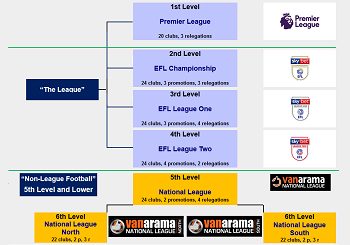
In 1992 the First Division clubs resigned from the Football League en masse and on 27 May 1992 the FA Premier League was formed as a limited company working out of an office at the Football Association's then headquarters in Lancaster Gate. This meant a break-up of the 104-year-old Football League that had operated until then with four divisions; the Premier League would operate with a single division and the Football League with three.
There was no change in competition format; the same number of teams competed in the top flight, and promotion and relegation between the Premier League and the new First Division remained on the same terms as between the old First and Second Divisions. The number of clubs in the Premier League decreased from 22 in 1992-93 to just 20 three seasons later. It has remained at 20 clubs since season 1995-96.
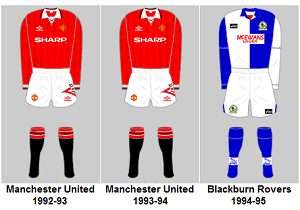
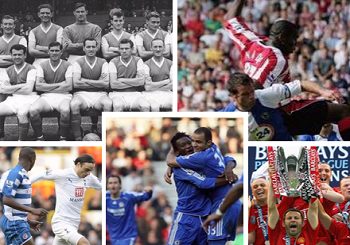
There has been a total of 40 different clubs in the Premier League from 1992-93 to 2007-08 with seven clubs (Arsenal, Aston Villa, Chelsea, Everton, Liverpool, Manchester United and Tottenham Hotspur) being ever-present.Only four of those 40 clubs have won the Premier League title - Manchester United, Chelsea, Arsenal and Blackburn Rovers.New boys Stoke City and Hull City appear for the first time in season 2008-09 and become clubs 41 & 42 to participate.
Stoke have guaranteed their Premier League place for 2009-10 along with Hull City. West Bromwich Albion became the first Premier League club to be relegated in 2008-09 and were followed on the last day of the season by Middlesbrough and Newcastle United.
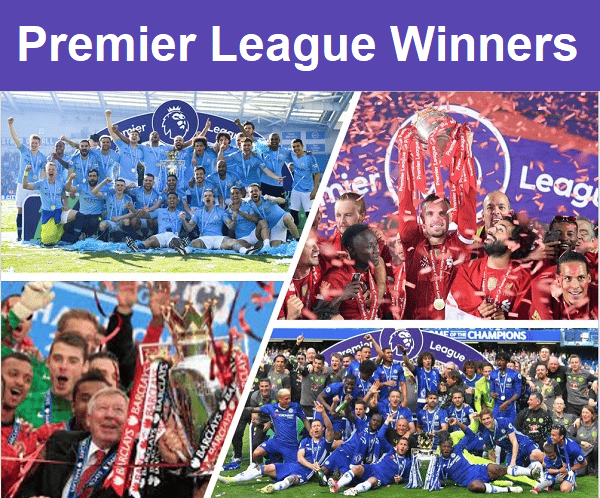
Manchester United won their third consecutive Premier League title and 11th overall to draw level with Liverpool on 18 League titles.
Wolverhapton Wanderers became the first team to gain automatic promotion to the Premier League for season 2009-10. They were followed by Birmingham City, who return to the Top Flight after one season away and who clinched the second automatic promotion slot.
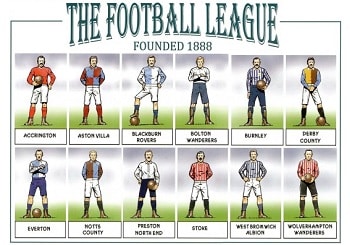
The remaining promotion place was contested in a Wembley play-off between Burnley and Sheffield United on Monday 25th May 2009 which Burnley (who were one of the 12 Founder Members of the Football League back in 1888) won and thus became the 43rd club to participate in the Premier League since its inception in 1992.